
Modified Bitumen Torch Systems
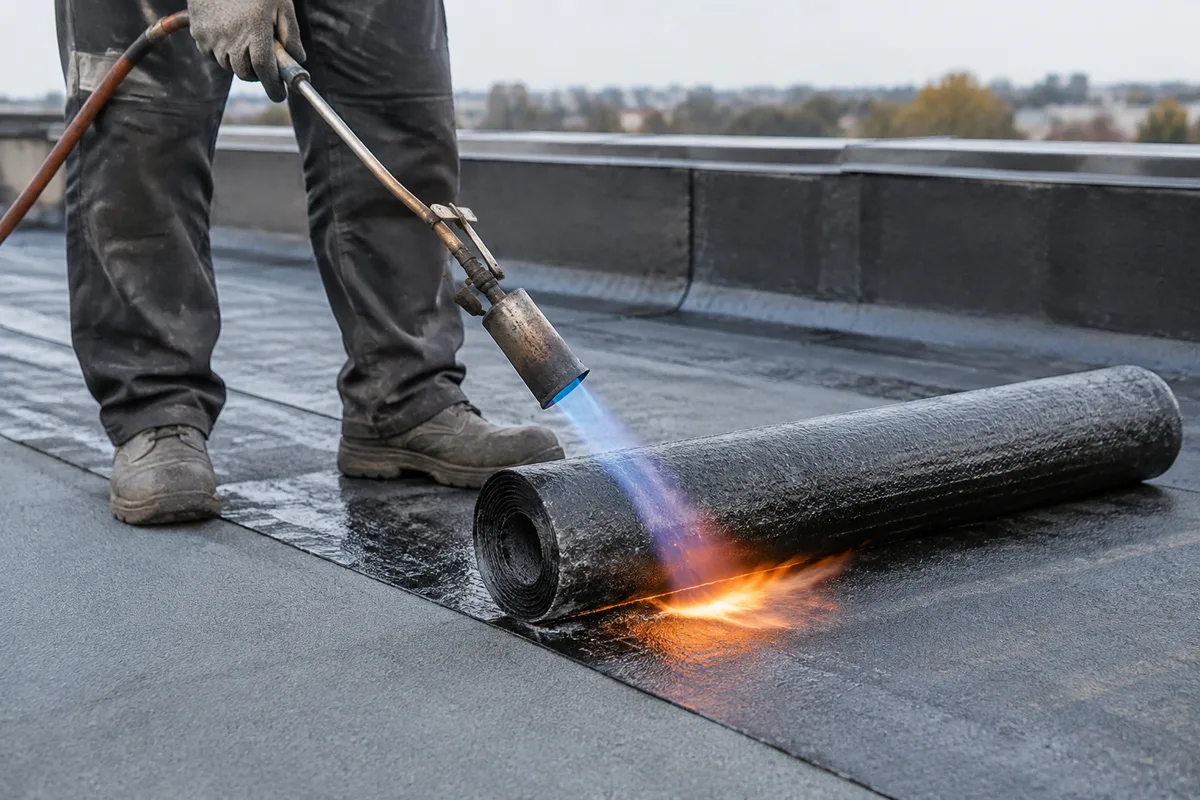
Modified Bitumen Torch Systems
Modified bitumen torch systems use heat to fuse multiple layers of asphalt-based membrane into a single, continuous barrier across a flat or low-slope roof. The torch-applied method bonds seams tightly, giving the finished surface strong resistance to Chicago's freeze-thaw cycles, ponding water, and wind uplift. Building owners typically turn to this system when replacing an aging flat roof or when a section of an existing bitumen roof needs a durable, long-term repair.
Why Torch-Applied Layers Matter
- Layered protection — Multiple fused sheets reduce the chance of gaps or weak spots at the seams.
- Weather resilience — The finished membrane is built to handle Chicago's temperature swings and precipitation.
- Flashing integration — Sheet Metal Flashing Fabrication on site allows edges, valleys, and roof penetrations to be sealed alongside the membrane work.
Safety and Verification
Torch work requires careful heat control on an open roof, so crews rely on Fall Protection & Safety Systems throughout installation. Once layers are in place, Infrared Roof Moisture Scanning and Moisture Meters can confirm the membrane is sealing properly and that no moisture is trapped beneath the new surface.
Where It Fits
Modified bitumen torch work is often paired with broader Flat Roof Systems, Roof Replacement, and Roof Coating Applications services for buildings across Chicago.