
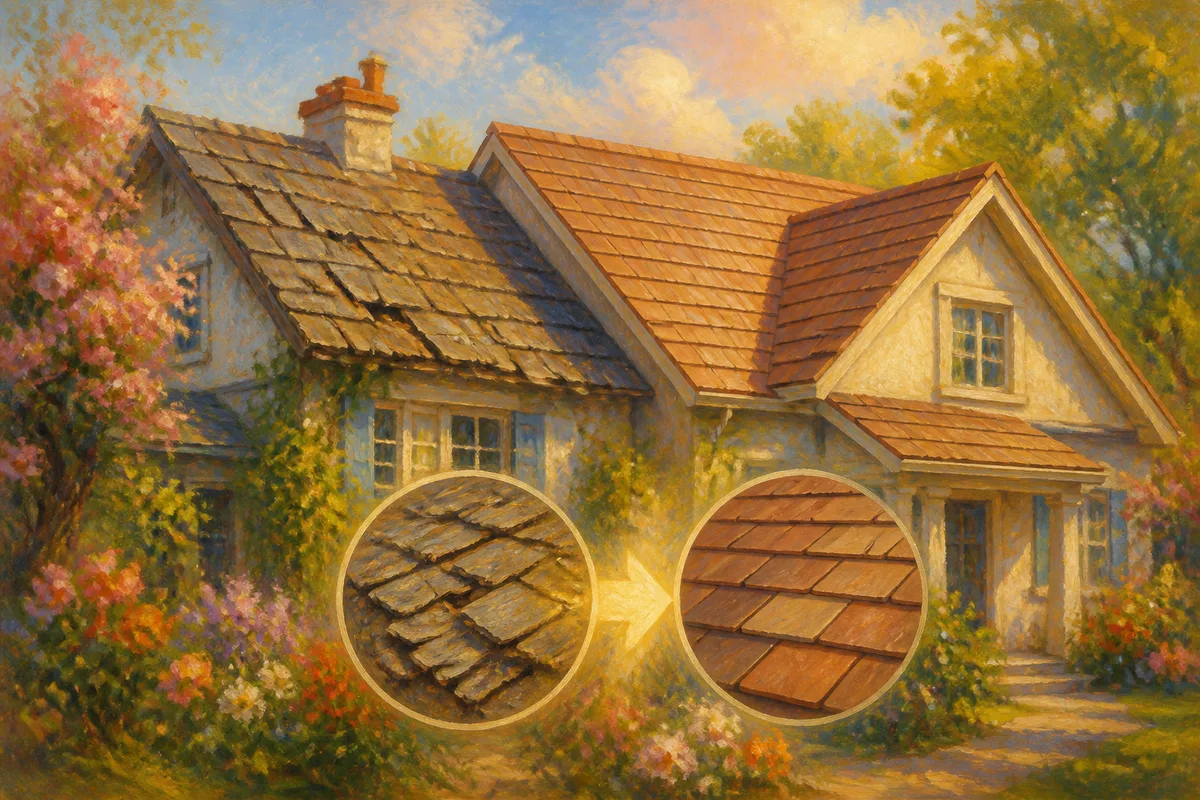
Roof Repair or Replacement? How Pros Decide
Every roof eventually asks its owner a hard question: is it time to fix a problem area, or is it time to start fresh? The answer isn't always obvious from the ground, and a lot of homeowners end up guessing based on how bad a leak looks or how old they think the roof is.
The good news is that roofing professionals don't rely on guesswork. They look at a handful of specific factors that, taken together, point toward either a repair or a full replacement. Once you understand what those factors are, you can follow the same reasoning and ask better questions when someone is up on your roof.
How Old Is the Roof, Really?
Age matters, but not in the simple way people assume. A roof isn't just a birthday number, it's a material with a working life that depends on the type of shingle or membrane, the quality of the original installation, and how much sun, wind, and freeze-thaw cycles it has been through in Chicago weather.
A roof nearing the end of its expected lifespan tends to fail in more than one spot at a time. If a contractor finds that the flashing, the shingles, and the decking are all showing wear in different areas, that's a sign the whole system is aging out together, not just one unlucky section.
On the other hand, a newer roof with an isolated problem, like a damaged vent boot or a section lifted by wind, is usually a strong candidate for a targeted repair. The rest of the material still has plenty of useful life left, so replacing the entire roof would be jumping ahead of where the roof actually is.
How Much of the Roof Is Affected?
The next question is about scope. A leak in one corner of the attic doesn't always mean the whole roof is compromised. Sometimes it traces back to a single piece of flashing around a chimney or skylight, and once that's addressed, the rest of the roof is fine.
But if damage shows up in multiple, unrelated areas, or if a storm has stripped shingles across a wide section, the calculation changes. Chasing down separate repairs across a large area often costs more in time and materials than simply replacing the roofing surface once and being done with it.
This is why a thorough inspection matters more than a quick look from the driveway. Climbing up and checking the decking, the flashing, the vents, and the edges gives a much clearer picture of whether the damage is contained or spread out.
What's Underneath: Layers and Decking
Roofs in Chicago sometimes have more than one layer of shingles stacked from past work, since older homes were occasionally reroofed without removing the original material. Extra layers add weight and can hide problems with the decking underneath, which is the wood layer that everything else is fastened to.
If the decking has soft spots, rot, or visible sagging, that's a bigger issue than the surface material alone. Repairing shingles over damaged decking doesn't solve the real problem, it just covers it up for a little while longer. In cases like this, replacement gives a contractor the chance to inspect and fix the structure underneath, not just the top layer.
This is also where flat roof systems and low-slope commercial roofs differ a bit from a typical shingled home. Materials like TPO, EPDM, and modified bitumen age and wear differently, so the same layer-and-decking questions get asked, just with different materials in mind.
Weighing Repair Against Replacement
Once age, scope, and structure are all considered, the decision usually comes down to a simple comparison: does a repair solve the actual problem, or does it just delay a replacement that's coming anyway? A well-done repair on a roof with years of life left is a smart move. Patching a roof that's already failing in several places just pushes the same decision down the road, often at a higher cost later.
Preventative maintenance plays a role here too. Roofs that get regular inspections tend to reveal small issues while they're still small, which keeps more decisions in the repair category rather than the replacement category. Waiting until a leak shows up inside the house usually means the damage has had time to spread.
When to Call a Professional
None of these factors are things you need to figure out alone. If you're seeing signs of a leak, noticing missing or curling shingles, or you just haven't had your roof looked at in a while, it's worth having someone experienced take a look and walk you through what they find and why.
Every roof and every situation is a little different, so if you have questions about your own home or building, give Perez Roofing & Masonry Inc. a call. We're happy to talk through what we see and help you understand your options before any decisions get made.
Questions about your own situation? The team at Perez Roofing & Masonry is happy to help — call us at (773) 491-2968 or request an appointment.
This article is for general information only.